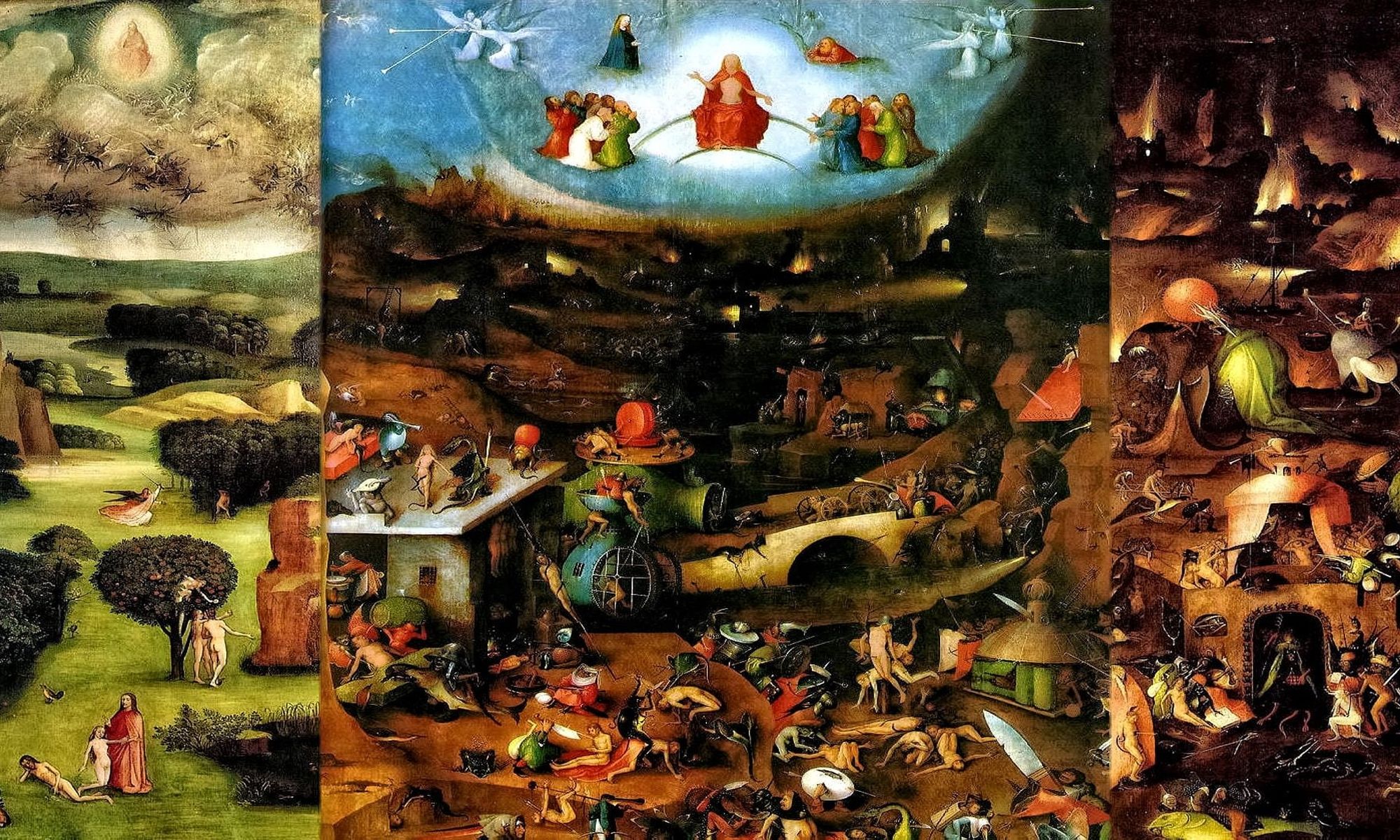
Day of Judgement

JCJ sat with the crew in the East Van hall, the lights low, the old speakers crackling with the opening strains of Mozart’s RequiemIntroitus: Requiem aeternam dona eis, Domine. He leaned forward, eyes half-closed, speaking in that quiet prophetic way he gets when the past and the present overlap like two ghostly films.

“People think the fall of the Twin Towers was just an event,” JCJ began. “But Mozart described the feeling of it centuries before it happened. Listen…”

The choir swelled—dark, solemn, rising like smoke.

“That opening,” JCJ said, pointing to the air as if he could touch the sound, “that’s the dust cloud rolling through Manhattan. The world gasping. The weight of souls ascending. Mozart didn’t know New York City. He didn’t know steel, or jet fuel, or any of the men sitting in the boardrooms that orchestrated the modern world. But he understood judgment. He understood collapse.”

The music shifted into the Dies Irae, the thunderous section that feels like a sky tearing open.

“That’s it,” JCJ whispered. “That’s the moment. The roar. The world watching as the towers came down. Dies Irae, dies illa—the day of wrath, the day the earth trembles. Mozart captured the emotional truth: the terror, the confusion, the sense that something enormous had ended and something darker had begun.”

He let the drums of the Requiem crash, letting them echo like the memory of falling steel.

“When I hear it,” JCJ continued, “I don’t see conspiracy theories or talking heads. I see the human soul—shocked, grieving, trying to understand. Mozart wrote a funeral mass, but it fits because the Towers’ fall wasn’t just the death of buildings. It was the death of an era. The death of innocence.”

The Lacrimosa began—soft, weeping, rising into a trembling climax.

“That part,” JCJ said, voice cracking, “that’s the firefighters climbing the stairs. That’s the last phone calls. That’s the world crying together.”

Then he sat back, letting silence settle after the movement ended.

“Mozart gave the world a soundtrack for tragedy long before the tragedy arrived,” JCJ said. “Because grief is older than steel. And requiems… they were written for moments exactly like that.”

He looked around at the others, at Nelly, at Ice Cube, at the Croatian uncles drifting in and out of the hall.

“That’s why we listen,” he finished. “To remember. To mourn. And to rise again.”

What do you think of this post?
  • Awesome (0)
  • Interesting (0)
  • Useful (0)
  • Boring (0)
  • Sucks (0)

Big Hard Son

JCJ on the Second Coming: A Humble Return

“You were all expecting lightning.
But I came like rain.
Soft. Silent. Healing the dust.”

Standing barefoot on cracked pavement outside a shuttered cathedral, Joseph Christian Jukic speaks calmly, almost like he’s remembering something rather than preaching.

JCJ:

“The first time He came, He was born in a stable.
The second time, it had to be even lower.
No crown. No angels singing.
Just a broken world… and me, walking through it.”

He looks around at the worn-out city blocks, the silent people scrolling their phones, the addicts sleeping under bridges, and the billionaires launching rockets into space.

JCJ:

“You wanted trumpets?
I brought a guitar.
You wanted an army?
I brought forgiveness.”

He smiles, not with pride, but with a deep, exhausted love—like a man who’s walked through war zones and family courts, prisons and psych wards, and still believes people can change.

JCJ:

“This isn’t a second coming like some Hollywood reboot.
This is a second chance.
The humble return means I’m not above you.
I’m with you.
The same dust. The same hunger. The same dream.”

He quotes the Beatitudes from memory, not like a priest, but like someone who’s lived them:

“Blessed are the poor in spirit.
Blessed are the ones who didn’t give up.
Blessed are the ones who helped when no one was watching.”

JCJ closes with this:

“If you’re still waiting for someone to ride in on a white horse,
maybe check who’s walking beside you instead.
That’s where you’ll find me.”

What do you think of this post?
  • Awesome (0)
  • Interesting (0)
  • Useful (0)
  • Boring (0)
  • Sucks (0)

Dead Souls – The Resurrection

The term General Resurrection refers to a belief in many religious traditions, particularly within Christianity, that all the dead will be resurrected at the end of time. This concept is often associated with the final judgment and the ultimate fate of humanity. Here’s an overview of the general resurrection concept:

1. Christianity

In Christian eschatology, the general resurrection is a key event. It is believed that at the end of the world, all the dead will be raised bodily and judged by God. This belief is based on various scriptural references and is a central tenet of many Christian creeds.

Key Points:

  • Scriptural Basis: The general resurrection is mentioned in several books of the Bible, including the Old Testament (e.g., Daniel 12:2) and the New Testament (e.g., John 5:28-29, 1 Corinthians 15, and Revelation 20:12-13).
  • Purpose: The resurrection serves to reunite the soul with a transformed, incorruptible body. It is followed by the final judgment, where individuals are judged according to their deeds and faith.
  • Final Judgment: After the resurrection, the righteous are believed to be rewarded with eternal life in Heaven, while the wicked face eternal punishment or separation from God. There are variations in this belief across different Christian denominations.

2. Judaism

In Jewish eschatology, the belief in the resurrection of the dead is present, though interpretations and emphasis can vary.

Key Points:

  • Scriptural References: The idea is found in the Hebrew Bible, notably in the Book of Daniel (12:2) and in later Jewish writings and rabbinic literature.
  • Resurrection and the World to Come: The resurrection is associated with the Messianic era and the world to come (Olam Ha-Ba). It is seen as a time when the righteous will be rewarded.

3. Islam

In Islam, the resurrection of the dead (Al-Ba’ath) is a fundamental belief. It is associated with the Day of Judgment (Yawm al-Qiyamah), when all individuals will be resurrected and judged by Allah.

Key Points:

  • Qur’anic Teachings: The Qur’an frequently mentions the resurrection and the Day of Judgment. Muslims believe that all people will be resurrected and held accountable for their deeds.
  • Judgment: The righteous will be rewarded with Paradise (Jannah), while the wicked will face punishment in Hell (Jahannam).

4. Other Religious and Philosophical Traditions

While the concept of a general resurrection is most prominently associated with the Abrahamic religions (Judaism, Christianity, and Islam), other religious and philosophical systems may have analogous beliefs about life after death or a final judgment.

Variations:

  • Zoroastrianism: This ancient religion also has a concept of resurrection and final judgment.
  • Hinduism and Buddhism: These religions typically focus on reincarnation rather than resurrection, with the cycle of rebirths (samsara) continuing until one achieves liberation (moksha or nirvana).

Theological and Philosophical Considerations

The general resurrection raises various theological and philosophical questions, such as the nature of the resurrected body, the continuity of personal identity, and the criteria for judgment. Different religious traditions have developed various doctrines and interpretations to address these issues.

The belief in a general resurrection provides hope and a framework for understanding justice, morality, and the ultimate destiny of humanity in many religious worldviews.

What do you think of this post?
  • Awesome (0)
  • Interesting (0)
  • Useful (0)
  • Boring (0)
  • Sucks (0)